In The Eyes, a solo exhibition by Los Angeles-based artist Taylor Thomas, is an energizing archival perspective that illuminates the history of television (TV) and media, while showing how it’s relevant today, hinting at the performative behavior occurring behind the scenes over the years, especially the past 20 years. This body of work proposes and examines the question, ‘Who gets to define Blackness?’, through a nuanced frame.
With a background in film and media, Thomas refreshingly brings to light the history of television and how it is literally not calibrated for Black people and other communities of color. By utilizing the TV color bar in its traditional format and evolving it through the lens of abstraction, Thomas incorporates Black skin tones to bridge the connection and demonstrate what it takes and means to calibrate media, specifically TV, for diverse audiences. She continues to show the process of how TV and media are distilled into a refined, flattened diversity.
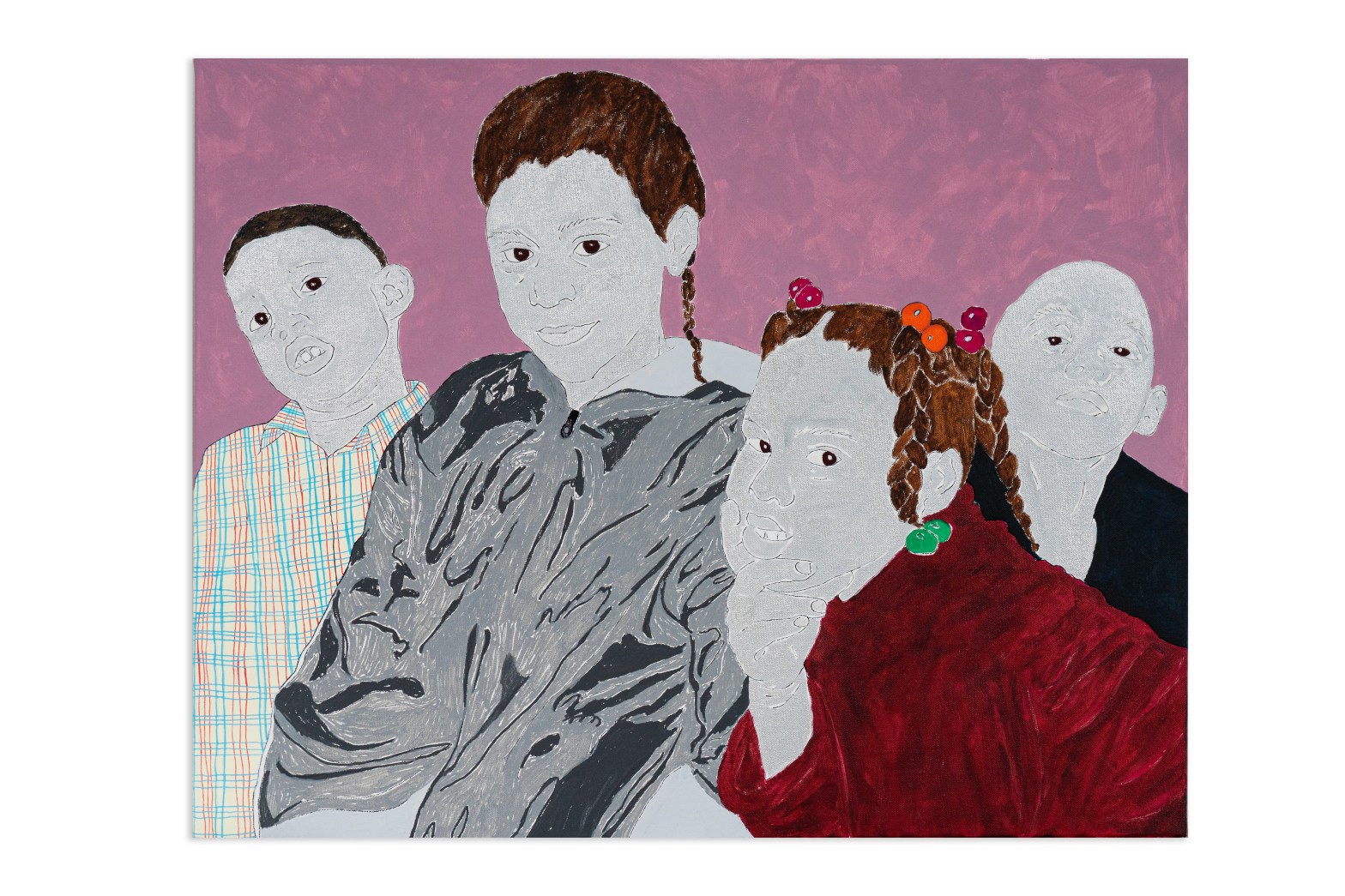
Staying true to her interests of creating stories that represent everyday, mundane, relatable experiences and relationships within Black family dynamics, she leans into the medium of family photos. Using photos, from the family archives, that weren’t intended to become paintings, she takes it upon herself to calibrate these sweet and tender familial relationships and scenarios with the use of chrome paint as the skin tone to symbolize the static one would see on TV when they are trying to get the “right signal” or when there is a “disruption” in the signal or right before the intended image is invited to come into view. Thomas hopes that audiences will be in an ongoing conversation with the individuals and moments portrayed in the paintings. These works are coming into view on a personal and intimate level.
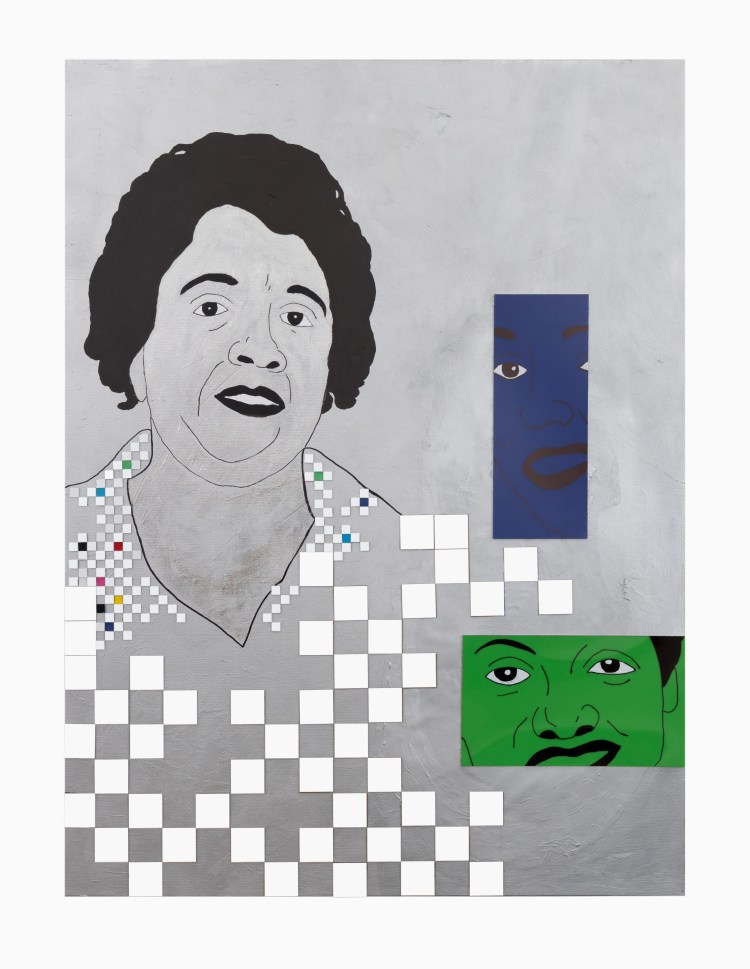
In the piece, Floraetta Portrait #2, 2024, Thomas shares with us a matrilineal figure in her family, her great-grandmother, who is completely in chrome, adorned by mirrors with small moments of color throughout, and accompanied by two aspects of her great-grandmother, one enveloped in blue and the other in green. She invites audiences to become a part of the work, to be in conversation with her. And depending on how people show up, mentally, physically, emotionally, that aspect of themselves is literally in conversation with her, and sees that part of them in her, and vice versa.
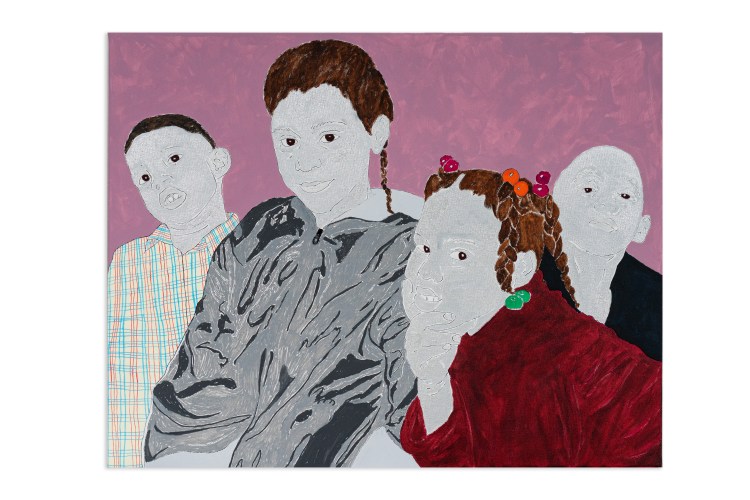
In Tea Time, 2026, audiences are greeted by adorable children, who are clearly in the middle of something, but feign cute innocence for the photo so that the grown-ups aren’t the wiser, and they can get back to what they were doing before they were interrupted. Leaning into the intention of the use of chrome paint as skin tone to communicate disruption, calibrating and coming into view, Thomas brings validity, authenticity, and innocence to the experiences of Black children in play and mischief. Allowing them to come into view for the audience to see them as kids being kids, which is seldom allowed due to the adultification of Black children.
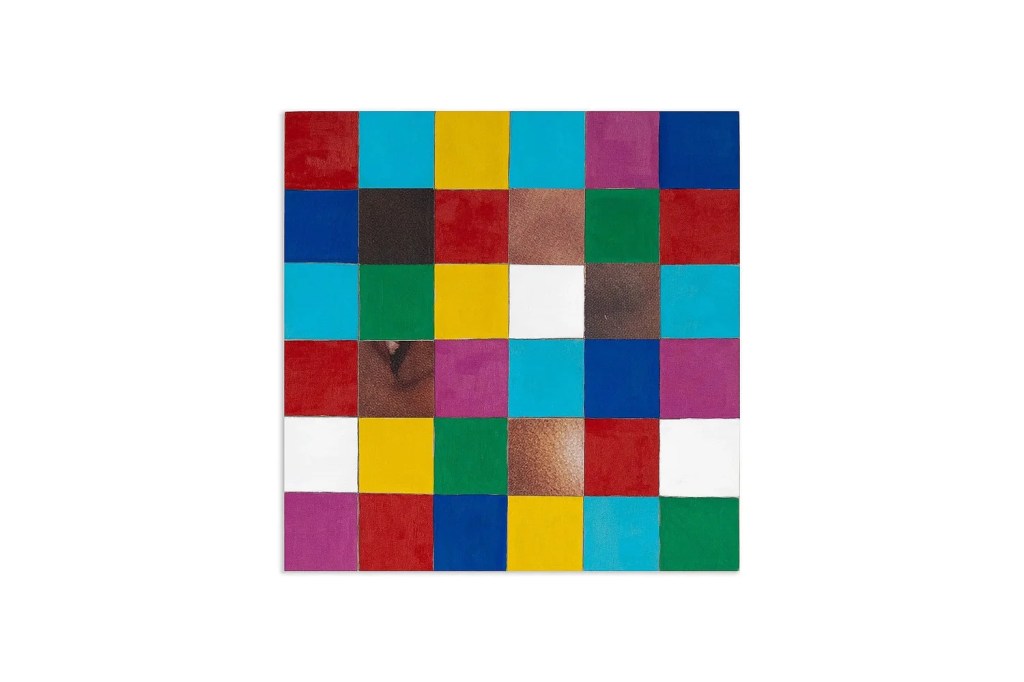
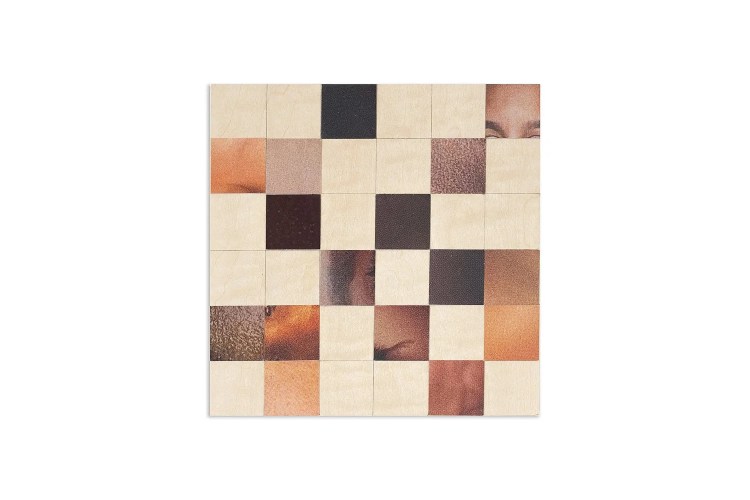
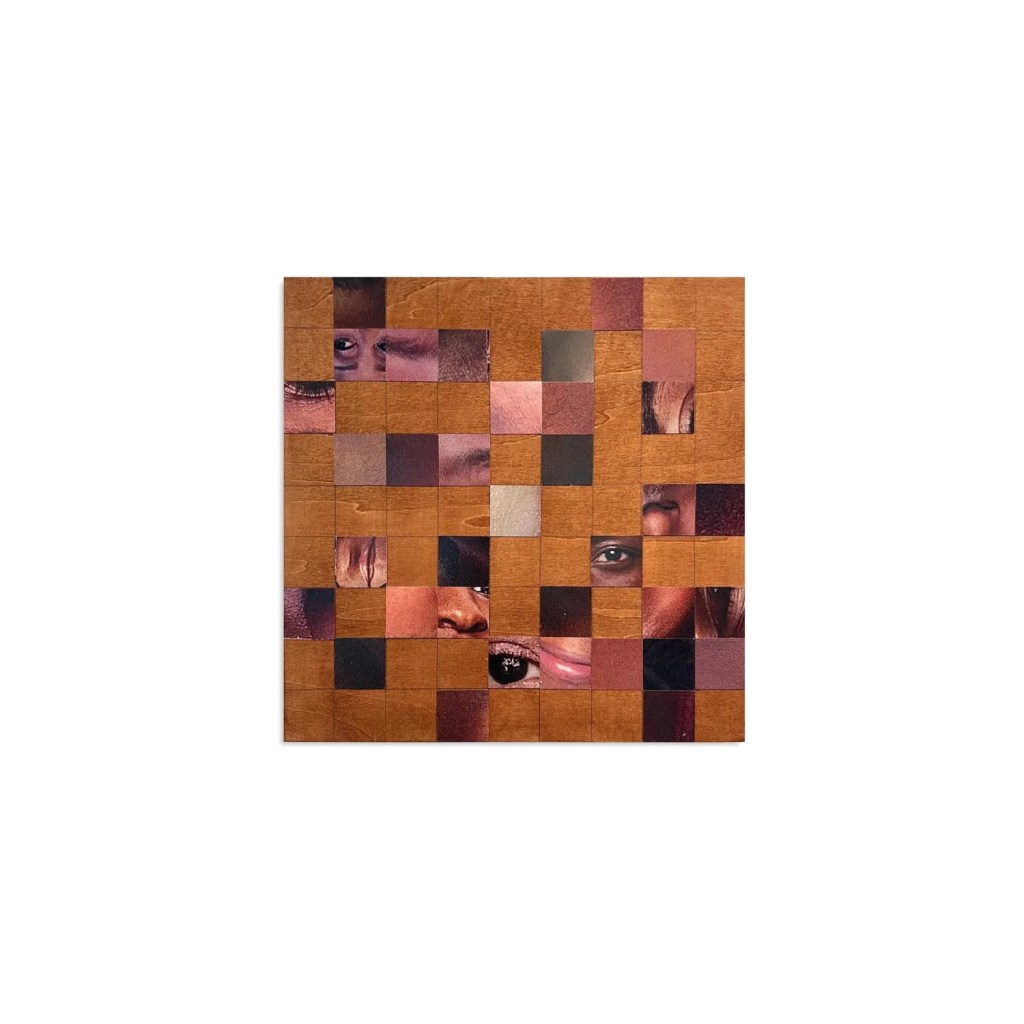
In a series of grid works, Thomas begins to calibrate the TV color bar, starting with the traditional color palette while sprinkling up-close and personal skin tones of family members as a way of disruption, in the literal color sense and also in the way of including Black people, breaking through the ‘traditional color barrier’. She continues with the transition of Black skin tones, done so up close so that you can see the texture of their skin. Thomas incorporates various wood tones to serve as the color palette that has an innate grain to it, with zoomed-in Black features, eyes, noses, lips, etc.
Thomas explores various textures in the exhibition, from paintings to wood blocks to hanging paper sculptures. Playing with tropes and cultural understandings such as ‘Black don’t crack’, in her sculptures, she illustrates that regardless of the weight and obscure shapes that Black people willingly or unwillingly contort into, they don’t crack or break. There is strength and resiliency. This is shown in Composite #2, 2025. In Composite #1, she documents the process TV and media go through when taking the dynamic and expansiveness of Blackness and distilling it through the traditional color bar, a nod to the acceptable mainstream gaze, to get a refined, flattened representation of Blackness that is digestible to the masses. This further highlights the question Thomas proposes throughout her work, ‘Who gets to define Blackness?’ This is followed by more sculptural works that show what is considered the tolerable and acceptable trend of Black representation in TV and media that we all come to know and recognize.
It’s refreshing to see a diverse body of work that skillfully speaks to the past, present, and future of TV and media in an inviting and familial approach, rather than being abrasive. If one isn’t careful, they can miss it altogether and still appreciate the body of work. And for those paying close attention, they will see the nuances and levels that Thomas is addressing. It will be exciting to see how Thomas will continue to develop this body of work.
In The Eyes, was on view from April 28, 2026, through May 8, 2026, at Strata Gallery in Santa Fe, NM. Taylor Thomas participated in the gallery’s emerging artist in residence program. If interested in purchasing Thomas’ work, head over to their website to reach out directly.
 Jarifuller
Leave a comment